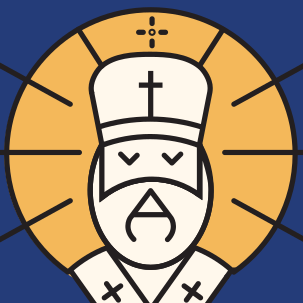
Holy and Glorious Pentecost — The Descent of the Holy Spirit
Holy and Glorious Pentecost, celebrated fifty days after Pascha, stands in both the Catholic and Orthodox traditions as one of the Twelve Great Feasts and the fulfillment of Christ’s promise that He would not leave His disciples orphaned but would send “the Advocate, the Spirit of truth” to dwell with them forever (cf. John 14:16–17). In the providence of God, this feast coincides in the Christian memory with the ancient Jewish Feast of Weeks (Shavuot), celebrated fifty days after Passover as a harvest thanksgiving and a remembrance of the giving of the Law on Mount Sinai. In Christian understanding, this background illuminates the deeper meaning of Pentecost: what was once written on stone is now written in the hearts of the faithful by the Holy Spirit (cf. 2 Cor 3:3), inaugurating the New Covenant in Christ.
On the day of Pentecost in Jerusalem, as described in Acts 2:1–11, the disciples were gathered in prayer when “a sound like the rush of a violent wind” filled the house, and “divided tongues, as of fire” rested upon each of them. They were filled with the Holy Spirit and began to proclaim the mighty works of God in many languages, so that pilgrims from every nation under heaven could hear the Gospel in their own tongue. The miracle is not only linguistic but profoundly theological: the Spirit reverses division caused by human sin and pride, not by erasing diversity, but by uniting all peoples in the one confession of Christ. This is why Pentecost is often called the “birth of the Church,” for here the Apostles move from fear into bold witness, from closed doors into mission.
In the teaching of the Church, Pentecost also reveals the mystery of the Holy Trinity. The Father sends the Holy Spirit through the risen and glorified Son, and the Church enters into the lived experience of God’s life and mission in history. The Catechism expresses this by affirming that on this day “the Holy Trinity is fully revealed.” The same Spirit who descended upon the Apostles continues to guide the Church, sanctify the faithful, and build up the Body of Christ through the sacraments, prayer, and mission.
The Gospel proclaimed at Pentecost (John 7:37–39; 8:12) places Christ at the center of this mystery. Standing in the Temple, Jesus cries: “Let anyone who is thirsty come to me and drink,” referring to the Spirit who would later be given to believers. He also proclaims, “I am the light of the world,” showing that the Holy Spirit always leads the Church into deeper communion with Christ, who is the source of life and illumination.
UGCC Liturgical and Living Tradition
In the Ukrainian Greek Catholic Church (UGCC) and across the Byzantine tradition, Pentecost is celebrated with particular richness and visible signs of renewal. The churches are often adorned with green branches, flowers, and freshly cut grasses. This is not merely decoration, but a living symbol that the Holy Spirit renews creation itself, making the Church a “new creation” in Christ. Green becomes the color of life, growth, and divine presence filling the world.
A distinctive feature of the UGCC celebration is the kneeling prayers (molitvy na kolinopreklynni) at the Vespers of Pentecost Sunday. For the first time since Pascha, the faithful kneel again in liturgical prayer, and long intercessory prayers are offered for the Church, the world, the departed, and all creation. These prayers explicitly invoke the Holy Spirit as “Heavenly King, Comforter, Spirit of Truth,” asking for healing, forgiveness, and renewal.
Another deeply rooted tradition is the Pentecost Vespers on Monday (Holy Spirit Monday), where the Church continues the celebration of the descent of the Spirit. In many UGCC communities, this day is still observed as a liturgical continuation of the feast, emphasizing that Pentecost is not a single moment but an ongoing life in the Spirit.
The Troparion of the feast—“Blessed are You, O Christ our God, who revealed the fishermen as most wise by sending down upon them the Holy Spirit”—is sung repeatedly, especially in Ukrainian chant tradition, highlighting the transformation of the Apostles from fear into apostolic boldness. In UGCC spirituality, this transformation is often linked to the lived vocation of every Christian: simple hearts made wise by grace.
Theological Meaning for the Church Today
Pentecost proclaims that the Holy Spirit continues to act in history, not as an abstract force, but as the personal gift of God who unites, sanctifies, and sends. The confusion of languages at Babel (Genesis 11) is not simply “reversed” but healed at a deeper level: unity is restored not by uniformity, but by communion in truth and love. Each person hears the Gospel in their own language, showing that God does not abolish human identity but transfigures it.
Thus, Pentecost remains the ongoing life of the Church. It is the source of her mission, the breath of her prayer, and the fire of her witness. In Catholic and Orthodox understanding alike, the Holy Spirit is not only remembered as a past gift, but received anew in every generation, especially in the sacraments, in personal prayer, and in the life of the Church gathered in Christ.
For the faithful today, Pentecost is therefore both memory and presence: the memory of the upper room in Jerusalem, and the present reality of the Spirit dwelling in the Church, calling every believer into courage, holiness, and mission until the end of the ages.
The Gifts and Fruits of the Holy Spirit
In both Catholic and Orthodox Christian spirituality — though sometimes expressed with different emphases — the Holy Spirit slowly transforms a person to become more like Christ. The Church teaches that the Seven Gifts of the Holy Spirit are permanent spiritual dispositions that make us more docile and responsive to the inspirations of the Holy Spirit. These gifts complete and perfect the virtues so the soul can follow God more readily. The Twelve Fruits of the Holy Spirit are the visible signs and spiritual “fruits” that gradually appear in a Christian life cooperating with divine grace.
The true work of the Holy Spirit is recognized primarily not by temporary excitement alone, but by increasing charity, humility, peace, repentance, faithfulness, obedience to God, and love for others. The Holy Spirit may also grant spiritual joy, consolation, and encouragement, but authentic spiritual experiences lead a person more deeply toward holiness, humility, and communion with Christ rather than pride or self-centeredness.
The Church also distinguishes between the Seven Gifts and charisms. The Seven Gifts are given for personal sanctification and spiritual growth, helping the soul live in union with God. Charisms, however, are special graces given for the service and building up of the Church and must always remain rooted in charity, truth, humility, and obedience.
A simple child-like way to understand this is:
- The Gifts are like holy tools the Holy Spirit places in the soul.
- The Fruits are the beautiful spiritual fruit that slowly grows from a life close to God.
- The Holy Spirit is like the gardener: through grace, prayer, repentance, and cooperation, He slowly helps the tree bear good fruit.
The Seven Gifts of the Holy Spirit
Wisdom
Wisdom helps a person love God above worldly success, pride, pleasure, or possessions. It allows someone to see life more through the eyes of eternity and to seek what truly leads to salvation. A person growing in wisdom becomes more peaceful, humble, prayerful, and less controlled by selfish desires.
A helpful biblical text connected to wisdom is:
“The fear of the Lord is the beginning of wisdom” (Proverbs 9:10).
Prayer and Practice: Holy Spirit, help me put God first in all things; I grow in wisdom by daily prayer, reverence before God, and choosing His will over selfish desires.
Book of Proverbs
Understanding
Understanding helps a person grasp spiritual truths more deeply — not only with the mind, but also with the heart. Through this gift, Scripture, prayer, suffering, worship, and the teachings of the Church begin to make deeper spiritual sense. A person with understanding becomes less spiritually confused and more rooted in faith.
A helpful biblical text connected to understanding is:
“He opened their minds to understand the Scriptures” (Luke 24:45).
Prayer and Practice: Holy Spirit, open my heart to Your truth; I grow in understanding by reading Scripture slowly, listening carefully, and reflecting prayerfully each day.
Gospel of Luke
Counsel
Counsel helps a person choose what is truly good and pleasing to God. It guides decisions with prudence, prayerfulness, and balance instead of impulsiveness or selfishness. Those growing in counsel often become trustworthy and compassionate guides for others.
A helpful biblical text connected to counsel is:
“Trust in the Lord with all your heart” (Proverbs 3:5).
Prayer and Practice: Holy Spirit, guide my choices and decisions; I grow in counsel by praying before acting and asking what will bring me closer to Christ.
Book of Proverbs
Fortitude
Fortitude gives courage and perseverance during suffering, temptation, fear, persecution, or hardship. It strengthens a person to remain faithful even when carrying crosses becomes difficult. This gift does not remove suffering, but helps the soul endure trials with hope and trust in God.
A helpful biblical text connected to fortitude is:
“My grace is sufficient for you” (2 Corinthians 12:9).
Prayer and Practice: Holy Spirit, strengthen me in every trial; I grow in fortitude by patiently enduring difficulties without abandoning prayer, hope, or faith.
Second Epistle to the Corinthians
Knowledge
Knowledge helps a person recognize God’s presence and understand the proper place of earthly things. It teaches the soul to use the world with gratitude while remembering that God alone is the ultimate treasure. A person with knowledge begins to see creation as pointing toward the Creator.
A helpful biblical text connected to knowledge is:
“Be still, and know that I am God” (Psalm 46:10).
Prayer and Practice: Holy Spirit, teach me to recognize Your presence everywhere; I grow in knowledge by practicing silence, gratitude, and awareness of God throughout the day.
Psalms
Piety
Piety fills the soul with love for prayer, worship, Scripture, the sacraments, the Church, and acts of mercy. It helps a person approach God with the trust and love of a child toward a loving Father and creates reverence toward holy things and compassion toward others.
A helpful biblical text connected to piety is:
“Blessed are the pure in heart” (Matthew 5:8).
Prayer and Practice: Holy Spirit, form in me a loving and faithful heart; I grow in piety through sincere prayer, worship, humility, and service to others.
Gospel of Matthew
Fear of the Lord
Fear of the Lord is not terror, but holy reverence, awe, and filial respect before God. It turns the soul away from sin because it does not wish to offend the God whom it loves. This gift produces humility, repentance, obedience, and deeper trust in God. As spiritual life matures, fear increasingly becomes loving reverence rather than fear of punishment alone.
A helpful biblical text connected to fear of the Lord is:
“The fear of the Lord is clean, enduring forever” (Psalm 19:9).
Prayer and Practice: Holy Spirit, give me holy reverence before God; I grow in fear of the Lord by examining my conscience daily and quickly turning away from sin.
Psalms
The Twelve Fruits of the Holy Spirit
The Fruits of the Holy Spirit are spiritual perfections formed gradually within a person through grace and cooperation with God. They are called “fruits” because, like fruit growing on a healthy tree, they slowly appear in the life of someone living close to God through prayer, repentance, worship, charity, and faithful daily living. They are signs of spiritual maturity and deeper communion with Christ.
Charity (Love)
Charity is selfless love rooted in God. A charitable person forgives sincerely, serves quietly, sacrifices generously, and seeks the good of others before personal gain. True charity reflects Christ’s love.
A helpful biblical text connected to charity is:
“Love one another as I have loved you” (John 13:34).
Prayer and Practice: Holy Spirit, teach me to love as Christ loves; I grow in charity by serving others quietly and forgiving quickly.
Gospel of John
Joy
Christian joy is deeper than temporary happiness or emotional excitement. Even during suffering or hardship, a joyful Christian keeps hope because joy is rooted in God’s presence and promises rather than changing circumstances.
A helpful biblical text connected to joy is:
“Rejoice in the Lord always” (Philippians 4:4).
Prayer and Practice: Holy Spirit, root my joy in Christ; I grow in joy by thanking God daily in both good and difficult moments.
Epistle to the Philippians
Peace
Peace is the calm trust that God remains present even during anxiety, confusion, suffering, or uncertainty. A peaceful person often brings calmness to others rather than spreading fear, anger, or panic.
A helpful biblical text connected to peace is:
“My peace I give to you” (John 14:27).
Prayer and Practice: Holy Spirit, calm my anxious heart; I grow in peace by trusting God and praying whenever fear enters my mind.
Gospel of John
Patience
Patience helps a person endure delays, suffering, disappointments, and the weaknesses of others without constant anger or complaint. It teaches perseverance and humility during difficulties.
A helpful biblical text connected to patience is:
“Be patient, therefore, brethren” (James 5:7).
Prayer and Practice: Holy Spirit, teach me endurance and gentleness; I grow in patience by accepting inconveniences and people’s weaknesses without bitterness.
Epistle of James
Kindness
Kindness appears in gentle speech, compassion, encouragement, listening, and small acts of mercy. Kind people make others feel respected, comforted, and loved.
A helpful biblical text connected to kindness is:
“Be kind to one another” (Ephesians 4:32).
Prayer and Practice: Holy Spirit, soften my words and actions; I grow in kindness by speaking gently and helping others in small daily ways.
Epistle to the Ephesians
Goodness
Goodness is the sincere desire to do what is right even when nobody notices or rewards it. A good person seeks honesty, integrity, and faithfulness before God.
A helpful biblical text connected to goodness is:
“Let your light shine before others” (Matthew 5:16).
Prayer and Practice: Holy Spirit, guide me toward what is right; I grow in goodness by choosing honesty, truth, and integrity in daily life.
Gospel of Matthew
Generosity
Generosity frees the heart from selfishness and teaches a person to share time, forgiveness, help, attention, and material blessings freely with others. Generous people recognize that all blessings ultimately come from God.
A helpful biblical text connected to generosity is:
“Freely you have received, freely give” (Matthew 10:8).
Prayer and Practice: Holy Spirit, free me from selfishness; I grow in generosity by sharing my time, help, and blessings willingly with others.
Gospel of Matthew
Gentleness
Gentleness is strength under control. A gentle person corrects others with mercy, humility, patience, and compassion rather than harshness or pride. Christ Himself describes His own heart as gentle and humble.
A helpful biblical text connected to gentleness is:
“Learn from Me, for I am gentle” (Matthew 11:29).
Prayer and Practice: Holy Spirit, make my heart humble and gentle; I grow in gentleness by listening carefully and speaking peacefully during conflict.
Gospel of Matthew
Faithfulness
Faithfulness means remaining loyal to God, prayer, vocation, family, responsibilities, and truth even when emotions or circumstances become difficult. A faithful person continues walking with God steadily over time.
A helpful biblical text connected to faithfulness is:
“Be faithful unto death” (Revelation 2:10).
Prayer and Practice: Holy Spirit, keep me steady and faithful; I grow in faithfulness by remaining consistent in prayer and daily duties.
Book of Revelation
Modesty
Modesty is humility and simplicity in speech, behavior, appearance, and attitude. A modest person does not constantly seek praise, admiration, or attention, but instead desires to reflect God quietly and sincerely.
A helpful biblical text connected to modesty is:
“Let your modesty be known to all” (Philippians 4:5).
Prayer and Practice: Holy Spirit, guard my heart from pride and vanity; I grow in modesty by living simply and seeking God’s approval above human praise.
Epistle to the Philippians
Self-control
Self-control helps a person govern desires, habits, speech, impulses, and emotions wisely instead of being ruled by them. Through grace, it brings freedom from slavery to sinful passions.
A helpful biblical text connected to self-control is:
“Every athlete exercises self-control in all things” (1 Corinthians 9:25).
Prayer and Practice: Holy Spirit, strengthen my discipline and freedom; I grow in self-control through daily moderation, fasting, and small sacrifices.
First Epistle to the Corinthians
Chastity
Chastity is purity, reverence, and right ordering of love according to one’s state in life. It teaches a person to honor both their own body and the dignity of others as temples of the Holy Spirit.
A helpful biblical text connected to chastity is:
“Blessed are the pure in heart” (Matthew 5:8).
Prayer and Practice: Holy Spirit, keep my heart and mind pure; I grow in chastity by guarding my thoughts, eyes, words, and actions with reverence before God.
Gospel of Matthew
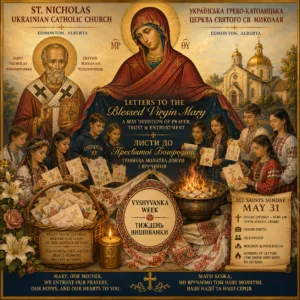
🌿 Letters to the Blessed Virgin Mary & Vyshyvanka Week Celebration
ST. NICHOLAS UKRAINIAN CATHOLIC CHURCH
The month of May has long been associated in Christian tradition with special devotion to the Blessed Virgin Mary Theotokos (Blessed Virgin Mary). During this season, the faithful are invited to deepen their love for the Mother of God through prayer, Marian hymns, processions, the Rosary, and personal acts of devotion.
In the beauty and renewal of spring, Christians have often seen a reflection of the spiritual beauty of the Virgin Mary, through whom Christ, the Author of Life, entered the world. For this reason, May gradually became especially dedicated to prayerful devotion to the Mother of God, who always leads the faithful toward her Son, Jesus Christ.
✉️ A Parish Devotion of Entrustment
Throughout the month of May, our parish continues the devotional practice of writing personal and anonymous letters to the Blessed Mother.
This practice was also experienced during Fr. Slavko’s formation in the Minor Seminary in Rome as a personal way of expressing prayer and entrusting intentions to the maternal intercession of Mary. While this exact custom is a local parish devotion, it is inspired by broader Catholic traditions of Marian trust and by the simple, heartfelt spirituality encouraged by Saint John Bosco and the Salesian tradition.
Writing a letter can help express prayers and concerns often carried silently in the heart. This devotion is not a sacrament and should not be understood as magical or as guaranteeing any particular outcome. Rather, it is a personal and symbolic act of prayer through which the faithful ask the Mother of God to intercede for them before her Son.
A basket has been placed before the iconostasis, next to the icon of the Mother of God, where the faithful may place their letters throughout the month.
🌸 Spirit of the Letters
The letters are intended as acts of prayer, repentance, thanksgiving, spiritual healing, reconciliation, trust in God, and loving entrustment to the care of the Mother of God.
You are encouraged to write about:
- spiritual struggles and temptations
- healing within family life and relationships
- fears, anxieties, and burdens
- gratitude for blessings received
- prayers for loved ones and those who suffer
- growth in faith, hope, peace, and love
This devotion should remain centered on spiritual life and conversion of heart rather than worldly or material desires.
For forgiveness of sins and reconciliation with God, the faithful are encouraged to participate regularly in the Holy Mystery of Repentance (Confession) and the sacramental life of the Church.
✉️ How to Prepare Your Letter
Please do not write your name or surname anywhere in the letter or on the envelope. God already knows your intentions, and we entrust our prayers to the maternal intercession of the Blessed Virgin Mary.
If praying for another person, a first name may be included if desired, but this is not necessary.
Children, youth, and adults are all warmly invited to participate.
You are encouraged to place your letter in an envelope and, if you wish, decorate it with drawings, flowers, crosses, icons, colors, or other symbols of faith and prayer.
This is not about artistic talent or appearance, but about offering a small part of your heart, time, and attention to God through the intercession of the Mother of God. Just as we often prepare a thoughtful gift for someone we love, this small effort can also become part of our prayer.
A carefully prepared letter can reflect sincerity, reverence, and the importance of the intentions we place before the Mother of God.
You may also write a respectful title on the envelope such as:
“Blessed Virgin Mary,” “Mother of God,” “Theotokos,” “Queen of Heaven,” or another traditional Christian title expressing love and reverence for the Mother of God.
No special format is required. What matters most is a sincere and humble heart before God.
🎶 Special Participation of Visiting Students
On All Saints Sunday, May 31, we will also be blessed to welcome visitors from Chesterton Academy of St. Isidore, who will prayerfully join our parish community for the Divine Liturgy.
The students will lend their voices in singing portions of the Divine Liturgy together with our parish choir, enriching the beauty of our common prayer. They too will participate in this Marian devotion by bringing their own prayer intentions in the form of letters to the Blessed Mother.
🧵 St. Nicholas Celebrates Vyshyvanka Week
On Thursday, May 21, 2026, Ukrainians throughout the world celebrate Vyshyvanka Day — the 20th anniversary of this international celebration that began in 2006 as a student initiative.
Vyshyvanka Day has become a worldwide expression of Ukrainian faith, identity, resilience, dignity, and cultural heritage through the wearing of the traditional embroidered shirt.
At St. Nicholas, we would like to celebrate throughout the week by making ourselves visibly present in the community wearing our vyshyvanky with joy and gratitude.
Some ideas for participation:
- Go for coffee or dinner with family and friends wearing your vyshyvanka
- Wear your vyshyvanka throughout the week wherever you go
- Share photos on social media
- Send photos to Father Slavko for inclusion in the parish bulletin
👕 Sunday, May 31 – Parish Vyshyvanka Sunday
All parishioners are warmly invited to wear their vyshyvanka to the Divine Liturgy on All Saints Sunday, May 31.
Following the Divine Liturgy, we hope to gather for a parish photo, possibly in front of the iconostasis or even outside on the stairs. Fellowship will follow as a joyful witness of our faith, heritage, and parish community.
This year, the parish Vyshyvanka celebration is intentionally being held on May 31 so that the focus of Sunday, May 24 may remain fully on the children receiving their First Solemn Communion and supporting them and their families on that special day.
🔥 Conclusion of the Month of May
On All Saints Sunday, May 31, following the Divine Liturgy and fellowship, the parish will gather for a short Moleben and prayerful procession to the parking lot, where the collected letters will be respectfully burned.
This act should be understood only as a symbolic sign of surrender and entrustment to God — similar to the biblical image of incense rising in prayer before the Lord. The burning of the letters does not “send” prayers to heaven and does not guarantee any particular outcome. Rather, it serves as a visible reminder that the faithful place their concerns into the hands of God through the intercession of the Blessed Virgin Mary.
As the smoke rises, we are reminded to surrender our hearts, burdens, hopes, and prayers to the mercy and providence of God.
May the Mother of God intercede for us and lead us always closer to her Son, our Lord Jesus Christ.
Please share this invitation with your family members, friends, children, and loved ones. All are warmly welcome to participate in this beautiful month of prayer, Marian devotion, and joyful witness to our Ukrainian Christian heritage.
📅 Order of Events – All Saints Sunday, May 31
- Divine Liturgy — 10:00 AM (with visiting school choir)
- Parish Photo
- Fellowship
- Moleben and Procession
- Burning of Letters in the Parking Lot (for those wishing to attend)
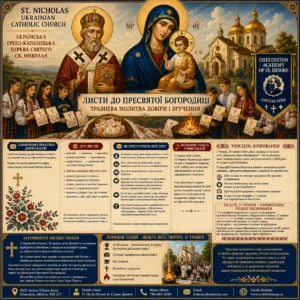
-
🌿 Листи до Пресвятої Богородиці та Святкування Тижня Вишиванки
ST. NICHOLAS UKRAINIAN CATHOLIC CHURCH
Українська Греко-Католицька Церква Святого Св. Миколая
Місяць травень у християнській традиції здавна пов’язаний з особливим почитанням Пресвятої Богородиці Theotokos (Blessed Virgin Mary). У цей час вірні покликані поглиблювати свою любов до Матері Божої через молитву, марійські пісні, процесії, Розарій та особисті акти побожності.
У красі та оновленні весни християни часто бачили відображення духовної краси Діви Марії, через яку Христос — Податель Життя — прийшов у світ. Саме тому травень поступово став місяцем особливої молитви до Богородиці, яка завжди провадить вірних до Свого Сина, Ісуса Христа.
✉️ Парафіяльна практика довіри Богові
Протягом місяця травня у нашій парафії продовжується побожна практика написання особистих та анонімних листів до Пресвятої Богородиці.
Ця практика також була присутня під час формації о. Славка у Малій Семінарії в Римі як особистий спосіб висловлення молитви та вручення своїх намірень материнському заступництву Марії. Хоча цей звичай є місцевою парафіяльною практикою, він натхненний ширшими католицькими традиціями довіри до Богородиці та простою і щирою духовністю святого Івана Боско John Bosco і салезіянської традиції.
Написання листа допомагає висловити ті молитви та переживання, які людина часто носить у серці мовчки. Ця практика не є Таїнством і не повинна розумітися як магічна дія чи гарантія певного результату. Це особистий і символічний акт молитви, через який вірні просять Матір Божу заступатися за них перед Її Сином.
Перед іконостасом, біля ікони Матері Божої, поставлено кошик, куди вірні можуть складати свої листи протягом усього місяця.
🌸 Дух листів
Листи мають бути знаком:
- молитви
- покаяння
- вдячності
- духовного зцілення
- примирення
- довіри Богові
- та вручення себе під опіку Матері Божої
У листах можна писати про:
- духовні труднощі та спокуси
- зцілення родини та стосунків
- страхи, тривоги та життєві труднощі
- подяку за отримані благодаті
- молитви за рідних і тих, хто терпить
- зростання у вірі, надії, мирі та любові
Ця практика повинна залишатися зосередженою на духовному житті та наверненні серця, а не на земних чи матеріальних бажаннях.
Для прощення гріхів і примирення з Богом вірні заохочуються регулярно приступати до Святої Тайни Покаяння (Сповіді) та до повного сакраментального життя Церкви.
✉️ Як приготувати свій лист
Будь ласка, не пишіть свого імені чи прізвища ні в листі, ні на конверті. Господь уже знає ваші намірення, а ми довіряємо наші молитви материнському заступництву Пресвятої Богородиці.
Якщо ви молитеся за іншу особу, можна написати лише ім’я, але це не є необхідним.
До участі щиро запрошуються діти, молодь і дорослі.
Заохочуємо вкладати свій лист у конверт та, за бажанням, прикрашати його малюнками, квітами, хрестиками, іконками, кольорами чи іншими символами віри та молитви.
Йдеться не про художній талант чи зовнішню красу, але про те, щоб присвятити Богові через заступництво Матері Божої частинку свого часу, уваги і серця. Так само, як ми стараємося приготувати гарний подарунок для когось, кого любимо, так і ця невелика старанність може стати частиною нашої молитви.
Дбайливо приготовлений лист може виражати щирість, пошану та важливість намірень, які ми довіряємо Матері Божій.
На конверті також можна написати шанобливий титул, наприклад:
- “Пресвята Богородиця”
- “Матір Божа”
- “Богородиця”
- “Цариця Неба”
- або інший традиційний християнський титул, що виражає любов і пошану до Матері Божої.
Не потрібна особлива форма. Найважливішим є щире і покірне серце перед Богом.
🎶 Особлива участь учнів-гостей
У Неділю Всіх Святих, 31 травня, ми також матимемо радість вітати гостей з Chesterton Academy of St. Isidore, які молитовно приєднаються до нашої парафіяльної спільноти під час Божественної Літургії.
Учні своїм співом підтримають окремі частини Божественної Літургії разом із нашим хором, прикрашаючи спільну молитву Церкви. Вони також братимуть участь у цій марійській практиці, приносячи свої молитовні намірення у формі листів до Пресвятої Богородиці.
🧵 Святий Миколай святкує Тиждень Вишиванки
У четвер, 21 травня 2026 року, українці по всьому світі святкують День Вишиванки — 20-ту річницю цього міжнародного свята, яке розпочалося у 2006 році як студентська ініціатива.
День Вишиванки став світовим виявом української віри, ідентичності, стійкості, гідності та культурної спадщини через носіння традиційної вишитої сорочки.
У парафії Святого Миколая ми хочемо святкувати не лише один день, але цілий тиждень, роблячи себе видимими у суспільстві через носіння вишиванки з радістю та вдячністю.
Декілька ідей для участі:
- Піти на каву чи вечерю з родиною або друзями у вишиванці
- Носити вишиванку протягом тижня всюди, де ви перебуваєте
- Ділитися фотографіями у соціальних мережах
- Надсилати фотографії о. Славкові для парафіяльного бюлетеня
👕 Неділя, 31 травня — Парафіяльна Неділя Вишиванки
Усіх парафіян щиро запрошуємо одягнути вишиванки на Божественну Літургію у Неділю Всіх Святих, 31 травня.
Після Божественної Літургії плануємо зробити спільну парафіяльну фотографію — можливо перед іконостасом або надворі на сходах храму. Після цього відбудеться спільне частування як радісне свідчення нашої віри, спадщини та парафіяльної єдності.
Цього року святкування Вишиванки у парафії навмисно перенесене на 31 травня, щоб неділя 24 травня залишилася повністю присвяченою дітям, які прийматимуть Урочисте Святе Причастя, та підтримці їх і їхніх родин у цей особливий день.
🔥 Завершення місяця травня
У Неділю Всіх Святих, 31 травня, після Божественної Літургії та спільного частування, парафія збереться на короткий Молебень і молитовну процесію на подвір’я храму, де зібрані листи будуть побожно спалені.
Цей акт слід розуміти лише як символічний знак довіри та вручення себе Богові — подібно до біблійного образу кадила, молитва якого підноситься перед Господом. Спалення листів не “відправляє” молитви до неба і не гарантує певного результату. Воно є видимим нагадуванням про те, що вірні складають свої турботи у Божі руки через заступництво Пресвятої Богородиці.
Коли дим підноситься вгору, ми пригадуємо собі, що повинні віддати Господу свої серця, турботи, надії та молитви.
Нехай Матір Божа заступається за нас і завжди провадить нас ближче до Її Сина, Господа нашого Ісуса Христа.
Просимо поділитися цим запрошенням зі своїми рідними, друзями, дітьми та близькими. Усі щиро запрошуються взяти участь у цій прекрасній травневій молитві, марійській побожності та радісному свідченні нашої української християнської спадщини.
📅 Порядок подій — Неділя Всіх Святих, 31 травня
- Божественна Літургія — 10:00 ранку (за участю шкільного хору)
- Спільна парафіяльна фотографія
- Частування
- Молебень і процесія
- Спалення листів на подвір’ї храму (для бажаючих)
The Feast of the Holy Ascension of Our Lord and Saviour Jesus Christ
Thursday, May 14, 2026
Forty days after the glorious Resurrection of Christ, the Church celebrates the great Feast of the Holy Ascension of Our Lord and Saviour Jesus Christ. Rooted in Sacred Scripture and celebrated from the earliest centuries of Christianity, this feast proclaims the completion of Christ’s earthly ministry and the fulfillment of His saving work.
After His Resurrection, Jesus remained with His disciples for forty days, teaching them and preparing them for the coming of the Holy Spirit. Then, on the Mount of Olives near Bethany, He blessed them and ascended into heaven in glory. As the disciples looked upward, the angels proclaimed: “Men of Galilee, why do you stand looking into heaven? This Jesus, who was taken up from you into heaven, will come in the same way as you saw Him go into heaven” (Acts 1:11).
In the Byzantine tradition, this feast is often called Analepsis — “the taking up” of Christ into heaven. The Ascension is not simply Christ “leaving” the world, but the glorification of His humanity in the presence of the Father. As the Church teaches, Christ enters into heavenly glory with our human nature transformed and exalted. The feast therefore becomes a pledge of our own calling to eternal life and communion with God.
The Ascension also points us toward Pentecost. Before ascending, Christ promised His disciples that He would send the Holy Spirit, the Comforter, who would strengthen and guide the Church. For this reason, the Feast of the Ascension stands as a bridge between the joy of Pascha and the coming of the Holy Spirit at Pentecost. In the Eastern Christian tradition, the Paschal celebration reaches its fulfillment in these holy days.
From ancient times, Christians gathered with great solemnity to celebrate this feast through prayer, Divine Liturgy, and hymns of joy. In the Eastern Churches, Ascension is among the great feasts traditionally observed with participation in the Divine Liturgy and prayerful devotion of the faithful. The feast reminds us that the Christian life is always directed upward — toward the Kingdom of Heaven.
The Ascension is also a reminder that Christ will come again in glory. The same Lord who ascended bodily into heaven will return again, and therefore the feast calls us to live with faith, hope, and spiritual vigilance.
Although Christ ascends into heavenly glory, He does not abandon His people. Through the Holy Spirit, through the Eucharist, and through the life of the Church, Christ remains always present among us. The disciples returned from the Mount of Olives not in despair, but with renewed faith and hope, awaiting the promise of the Father.
As we celebrate this holy feast on Thursday, May 14, may we lift our hearts and minds toward heaven and remember that our true homeland is found in the Risen and Ascended Lord.
Troparion of the Feast
“Christ our God, You ascended in glory, giving joy to Your disciples by the promise of the Holy Spirit. Through the blessing they were assured that You are the Son of God, the Redeemer of the world.”
🌸 The Mother of God in the Life of the Church
A Living Tradition of Love: East and West in Harmony
Devotion to the Blessed Virgin Mary is not an addition to the Christian life—it flows from the mystery of Christ Himself.
At the heart of this devotion is her sacred title: Theotokos—the God-bearer.
This truth was solemnly proclaimed at the Council of Ephesus, affirming that the One she bore is truly God and truly man.
👉 To honor Mary is to proclaim Christ.
✝️ 1. The Foundation of True Marian Devotion
Christ is the Source
The Church teaches clearly:
- Mary is inseparably united to the saving work of her Son
- Her intercession flows from His grace
- She never replaces or competes with Him
👉 Marian devotion is always Christ-centered—leading us into His Cross, His Resurrection, and His Eucharist.
Honor is Not Worship
The Church also makes an essential distinction:
- Adoration (latria) belongs to God alone
- Veneration (dulia) is given to the saints
The Mother of God is honored in a unique and profound way, but she is never worshipped.
👉 True devotion to Mary always safeguards the worship due to God alone.
🌿 2. The Western Tradition: Marian Devotion and the Liturgical Year
In the Latin Church, devotional customs such as:
- May (traditionally associated with the Blessed Virgin Mary)
- October (associated with the Rosary)
have developed over time as expressions of popular piety.
The Church values these practices, but gives a clear principle:
👉 They must always be in harmony with the liturgical year, not parallel to or independent from it.
For example:
- May often falls within the Easter season
- Therefore Marian devotion in this time is encouraged to reflect:
- Mary’s participation in the Paschal mystery
- her presence in the life of the early Church, especially at Pentecost
👉 In this way, Marian devotion deepens—not distracts from—the mysteries of Christ.
🌊 3. The Byzantine Tradition: The Theotokos in the Liturgical Life
In the Byzantine tradition, devotion to the Mother of God is not concentrated into a single month. Instead, it is integrated into the liturgical year itself.
Major Feasts of the Theotokos
- Nativity of the Theotokos (Sept 8 / 21)
- Entrance into the Temple (Nov 21 / Dec 4)
- Annunciation (March 25)
- Dormition (Aug 15 / 28)
👉 These feasts form a continuous witness to the mystery of salvation in Christ.
🌾 A Marian Liturgical Season: The Dormition Cycle (August)
The Byzantine Church offers a deeply structured Marian period:
🌿 Dormition Fast (Aug 1–14)
A time of prayer, repentance, and preparation.
🌸 Feast of Dormition (Aug 15 / 28)
Celebrating the falling asleep of the Mother of God and her being received into life by her Son.
🌼 Afterfeast
An extended liturgical celebration of this mystery.
👉 This period expresses the Marian dimension of the Paschal mystery:
death transformed into life in Christ.
🕊️ Marian Intercession in the Liturgical Cycle
Throughout the Byzantine liturgical year, the Church continually proclaims the intercession and maternal care of the Mother of God through its feasts, hymns, and prayers.
Among these, particular feasts and traditions emphasize her protection and intercession in the life of the faithful, especially in times of suffering and need.
🌸 4. Devotional Life in Ukrainian Catholic Practice
In many Ukrainian Catholic parishes today, we experience a living meeting of liturgical tradition and devotional life.
A Parish Experience
In some communities—such as our own parish of Saint Nicholas—it has become a common and meaningful practice for the faithful to gather before the Divine Liturgy, especially on Sundays, to pray the Rosary (Вервиця).
This reflects a development over recent generations, where Eastern Catholics have also embraced certain devotional practices from the wider Catholic Church.
👉 When properly understood, the Rosary is deeply Christ-centered:
- it meditates on the mysteries of Christ’s life
- it leads the heart into contemplation
- it prepares the faithful for the Divine Liturgy
Byzantine Devotional Services
At the same time, our authentic Eastern tradition offers a rich treasury of prayer:
- Moleben (Молебень) — prayer of supplication and thanksgiving
- Akathist (Акафіст) — a profound hymn of praise centered on the mystery of the Incarnation
- Paraklesis (Параклис) — a service of comfort and intercession, especially during the Dormition Fast
👉 These devotions, when properly ordered, support and deepen the liturgical life of the Church.
🌅 5. One Faith, Complementary Expressions
The Church breathes with both East and West:
- The West expresses devotion through recognized forms of popular piety, harmonized with the liturgical year
- The East expresses devotion through liturgical integration and sacred seasons, especially in the Dormition cycle
👉 These are not competing approaches, but complementary expressions of one faith.
✨ 6. The Heart of Marian Devotion
Mary’s role is always the same:
- She receives everything from Christ
- She intercedes through Christ
- She leads us to Christ
Her words remain the path for every believer:
“Do whatever He tells you.”
🌸 Conclusion
Whether through:
- Marian devotions during the year
- the Dormition fast in August
- parish prayer before the Divine Liturgy
- or the liturgical feasts of the Church
We honor the Mother of God not as an end in herself—
but as the one who faithfully leads us:
👉 to the Cross
👉 to the Resurrection
👉 and to the Eucharist
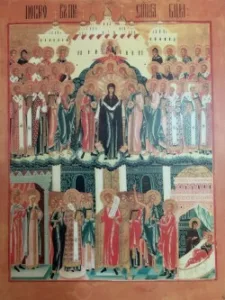
Holy Week and Paschal Services – 2026
Holy Thursday – April 2, 2026
Vespers with the Divine Liturgy of St. Basil the Great and the Rite of the Washing of the Disciples’ Feet
10:00 AM – at Saint Josaphat’s Cathedral with Bishop David
Matins of the Passion of Christ (Twelve Gospels)
7:00 PM
Followed by the Setting of the Place for the Holy Shroud – Божий Гріб
Holy / Good Friday – April 3, 2026
Great Vespers with the Laying of the Shroud – Виставлення Плащаниці
11:00 AM
Jerusalem Matins (Nadhrobne)
7:00 PM
Holy Saturday – April 4, 2026
Vespers with the Divine Liturgy of St. Basil the Great
12:30 PM
Followed by the Blessing of Paschal Foods (around 2:00 PM)
Nadhrobne
7:00 PM
The Glorious and Holy Sunday of the Resurrection of Our Lord – PASCHA
April 5, 2026
Paschal Matins with the Divine Liturgy
7:00 AM
Followed by the Blessing of Paschal Foods
Bright Monday – April 6, 2026
Divine Liturgy
10:00 AM
Bright Tuesday – April 7, 2026
Divine Liturgy
10:00 AM
Graveside Blessings – “Provody”
Evergreen Cemetery
April 12, 2026 – 5:00 PM
St. Michael’s Cemetery
April 19, 2026
Please approach Fr. Slavko with suggestions regarding preferred dates for:
Glenwood Cemetery (Sherwood Park) – Day and time to be determined.
Other cemeteries in Edmonton – Day and time to be determined.
For information please contact:
Fr. Slavko – 780-467-6200
Страсний Тиждень і Пасхальні Богослужіння – 2026
Великий Четвер – 2 квітня 2026
Вечірня з Літургією св. Василія Великого та
Чин умивання ніг
10:00 – у Катедрі св. Йосафата з Владикою Давидом
Утреня Страстей Христових (12 Євангелій)
19:00
Після Утрені – Виставлення Божого Гробу
Велика П’ятниця – 3 квітня 2026
Вечірня з виставленням Плащаниці
11:00
Єрусалимська Утреня (Надгробне)
19:00
Велика Субота – 4 квітня 2026
Вечірня з Літургією св. Василія Великого
12:30
Освячення пасхальних страв – приблизно о 14:00
Надгробне
19:00
Світле Христове Воскресіння – ПАСХА
5 квітня 2026
Пасхальна Утреня з Божественною Літургією
07:00
Після Богослужіння – освячення пасхальних страв
Світлий Понеділок – 6 квітня 2026
Божественна Літургія
10:00
Світлий Вівторок – 7 квітня 2026
Божественна Літургія
10:00
Проводи (Благословення гробів)
Evergreen Cemetery
12 квітня 2026 – 17:00
St. Michael’s Cemetery
19 квітня 2026 – 14:00
Просимо подавати пропозиції щодо дат для:
Glenwood Cemetery (Sherwood Park) – день і час буде визначено
Інші цвинтарі в Едмонтоні – день і час буде визначено
Контакт:
о. Славко – 780-467-6200
Fr. Slavko’s Version of the History of the Ukrainian Catholic Eparchy of Edmonton
Detailed Information Available on the Eparchial Website
full text:
https://eeparchy.com/2023/03/04/75th-anniversary-of-edmonton-and-toronto-eparchies
History of the Ukrainian Catholic Eparchy of Edmonton
The history of the Ukrainian Catholic Eparchy of Edmonton begins with the pioneering pastoral work of Blessed Nykyta (Nikita) Budka, the first Ukrainian Catholic bishop appointed for Canada. Born on June 7, 1877, in Dobromirka, then part of Austria-Hungary (now western Ukraine), Budka was ordained a priest on October 25, 1905, by Metropolitan Andrey Sheptytsky after studying theology in Vienna and Innsbruck.
Before his mission to Canada, Fr. Nykyta Budka served Ukrainian emigrants in various regions of Europe, including Galicia (now western Ukraine), and ministered to Ukrainian communities abroad—among them those in Prussia and Bosnia—by visiting settlements, assisting Ukrainian immigrants, and helping to organize pastoral care and support for families far from home. This early experience with Ukrainian migrant communities abroad helped shape his pastoral vision and prepared him for the monumental task that awaited him in Canada.
On July 15, 1912, while still in Europe, Pope Pius X appointed him Apostolic Exarch for Ukrainian Catholics in Canada, making him the first Eastern Catholic bishop in the world to receive full jurisdiction in the New World. He was consecrated a bishop on October 14, 1912, in Lviv, Ukraine, and arrived in Winnipeg on December 6, 1912, where he was enthroned on December 22, 1912.
Mission and Pastoral Work
Bishop Budka faced a massive pastoral challenge. At the time, there were only 17 priests and around 80 churchesserving Ukrainian settlers across the vast expanse of Canada, from the Atlantic to the Pacific. Over the next 15 years, he traveled tirelessly, visiting remote settlements, establishing new parishes and schools, educating clergy, and celebrating the sacraments wherever the faithful lived. He also worked to secure legal recognition of the Ukrainian Catholic Church in Canada and promoted bilingual education and the preservation of Ukrainian culture.
Even before Alberta had its own Eparchy, Budka ministered actively in the territory that would become the Edmonton Eparchy. On February 27, 1913, he visited Edmonton, and on March 2, 1913, he celebrated a hierarchical Divine Liturgy at St. Josaphat Parish, which later became the cathedral of the Edmonton Eparchy. He met with Ukrainian cultural groups, local Catholic leaders, and visited other settlements, including Sts. Peter and Paul Parish in Mundare, laying the foundation for future pastoral care in Alberta.
Bishop Budka’s work was not without challenges. He contended with pressures from secularization, Protestant missionary activity, and internal disagreements among Ukrainians, which contributed to the formation of the Ukrainian Greek Orthodox Church of Canada in 1918. In 1927, due to declining health and internal Church decisions, he returned to Europe. After World War II, he was arrested by Soviet authorities for defending the Church’s unity with Rome and endured harsh imprisonment until his death in a Soviet prison camp in Karaganda, Kazakhstan, on September 28, 1949. On June 27, 2001, he was beatified by Pope John Paul II as a martyr of the Faith.
Growth and Division of the Church in Canada
Following Bishop Budka’s pioneering work, the Ukrainian Catholic population in Canada continued to grow rapidly. By the early 1940s, the faithful numbered approximately 300,000, and the need for additional leadership became apparent.
On April 3, 1943, Fr. Nil Savaryn, OSBM, who had joined the Basilian Order in 1922 and arrived in Canada in 1932 to serve at the Basilian monastery in Mundare, Alberta, was appointed auxiliary bishop to Bishop Vasyliy Ladyka. Savaryn was consecrated bishop on July 1, 1943, in Toronto.
After the war, the continued growth of parishes and the influx of Ukrainian refugees highlighted the necessity for a division of the Church in Canada. Following Cardinal Eugène Tisserant’s visit to North America in 1947, the Holy See began planning the creation of separate ecclesiastical jurisdictions.
On January 19, 1948, Pope Pius XII approved the establishment of three Apostolic Exarchates, formally decreed on March 3, 1948:
-
Western Canada (Edmonton) – Bishop Nil Savaryn, OSBM
-
Central Canada (Winnipeg) – Bishop Vasyliy Ladyka
-
Eastern Canada (Toronto) – Fr. Isidore Boretsky
Fr. Andrew Roboretsky was appointed auxiliary bishop to Bishop Ladyka. Bishop Savaryn was solemnly installed at St. Josaphat Cathedral, Edmonton, on April 13, 1948. Bishops Boretsky and Roboretsky were consecrated on May 27, 1948, at St. Michael’s Cathedral, Toronto.
In 1956, the exarchates were elevated to full eparchies, and Metropolitan Maxim Hermaniuk was appointed the first Metropolitan of the Ukrainian Catholic Church in Canada.
Bishops of the Eparchy of Edmonton
-
Bishop Nil (Neil) Savaryn, OSBM – 1948–1986
-
Bishop Demetrius Greschuk – 1986–1990
-
Bishop Myron Daciuk, OSBM – 1991–1996
-
Bishop Lawrence Huculak, OSBM – 1996–2006
-
Bishop David Motiuk – 2007–present
The Eparchy Today
Led by Bishop David Motiuk, the Eparchy serves approximately 25,000 faithful in 81 parishes and missions across Alberta—from Lethbridge in the south to Manning in the north and Lloydminster in the east. St. Josaphat Cathedral remains the spiritual heart of the Eparchy, a center of Byzantine worship, parish life, and cultural heritage.
The Eparchy’s mission extends beyond parish life. Its clergy and laypeople provide catechesis, counselling, sacramental care, and outreach, serving refugees, newcomers, and marginalized populations. Evangelization, community support, and the promotion of faith and Ukrainian culture remain central.
The Eparchy of Edmonton continues the legacy of its pioneers, rooted in the tireless work of Blessed Nykyta Budka and strengthened through decades of pastoral care. It stands as a beacon of faith, hope, and service, preserving the Byzantine Catholic tradition for generations to come.
Clergy from Bosnia / Former Yugoslavia in the Eparchy of Edmonton
All of the following priests have served the Eparchy and are associated with families or origins in Bosnia/former Yugoslavia:
-
о. Антін Тарасенко – long‑time pastor and parish priest in Alberta (often mentioned in historical gatherings with former Yugoslavian clergy).
-
о. Михайло Планчак (Mihajlo Planchak) – listed on the Eparchy website as clergy; served multiple parishes and has been Spiritual Director at Holy Spirit Seminary.
-
о. Янко Гербут (Janko Herbut) – listed among the Eparchial clergy.
-
о. Славко Думич (Slavko Dumeč) – you (Fr. Slavko Dumeč), serving in the Eparchy of Edmonton.
-
о. Станіслав Білий (Stanislav Bjeli) – brother of о. Юліан Білий and serving in the Eparchy.
-
о. Юліан Білий (Julian Bilyj) – listed as parish priest in the Eparchy (note spelling in English varies as Bilyj).
-
о. Роман Планчак (Roman Planchak) – son of о. Михайло Планчак, currently serving as priest in the Eparchy.
Версія о. Славка: Історія Української Католицької Єпархії Едмонтона – Детальна інформація ви можете знайти на сайті Єпархії
Історія Української Католицької Єпархії Едмонтона бере свій початок із плідної пастирської праці блаженного Никити (Нікіти) Будки — першого українського католицького єпископа, призначеного для служіння в Канаді. Народився 7 червня 1877 року у селі Добромирка, тодішній Австро‑Угорщині (нині Західна Україна). Після вивчення богослов’я у Відні та Інсбруку він був висвячений на священика 25 жовтня 1905 року митрополитом Андреєм Шептицьким.
Перед своєю місією в Канаді о. Никита Будка служив українським емігрантам у різних регіонах Європи, зокрема в Галичині (нині Західна Україна), а також опікувався українськими громадами за кордоном, включно з відвідинами поселень українців у Пруссії та Боснії, підтримував душпастирське служіння українцям‑емігрантам та сприяв їхній духовній опіці далеко від Батьківщини. Цей ранній досвід у праці з українськими мігрантами за кордоном допоміг сформувати його пастирське бачення та підготував до величезного служіння, яке на нього чекало в Канаді.
15 липня 1912 року, перебуваючи ще в Європі, Папа Пій X призначив його Апостольським Екзархом для українських католиків у Канаді, зробивши його першим єпископом Східної Католицької Церкви у Новому Світі з повною юрисдикцією. Він був висвячений єпископом 14 жовтня 1912 року у Львові та прибув до Вінніпега 6 грудня 1912 року, де був інтронізований 22 грудня 1912 року.
Пастирське служіння Блаженного Будки
У той час лише близько 17 священиків і 80 церков обслуговували українських поселенців по всій Канаді від Атлантики до Тихого океану. Упродовж наступних 15 років єпископ Будка невтомно подорожував, відвідував віддалені громади, засновував нові парафії та школи, готував і організовував духовенство та звершував Таїнства там, де жили вірні. Він сприяв юридичному визнанню Української Католицької Церкви в Канаді та підтримував дворічну освіту й збереження української культури.
Ще до створення власної єпархії в Альберті, Будка активно служив на території майбутньої Єпархії Едмонтона:
-
27 лютого 1913 року — він відвідав Едмонтон,
-
2 березня 1913 року — очолив єрархічну Божественну Літургію у парафії святого Йосафата, яка згодом стала катедральним храмом Єпархії.
Він також зустрічався з українськими культурними спільнотами, місцевими католицькими лідерами та відвідував інші поселення, зокрема парафію свв. Петра і Павла в Мандарі, заклавши основу для подальшого пастирського служіння в Альберті.
Робота єпископа Будки не була легкою. Він зіштовхнувся з тиском секуляризації, діяльністю протестантських місій та внутрішніми розбіжностями серед українців, що сприяло створенню Української Греко‑Православної Церкви Канади у 1918 році. У 1927 році, через проблеми зі здоров’ям і внутрішні рішення Церкви, Будка повернувся до Європи. Після Другої світової війни він був заарештований радянською владою за оборону єдності Церкви з Римом та помер у радянському таборі в Караганді, Казахстан, 28 вересня 1949 року. 27 червня 2001 року Папа Іван Павло II беатифікував Никиту Будку як мученика віри.
Зростання і поділ Церкви в Канаді
Після служіння Будки українська католицька громада в Канаді продовжувала швидко зростати. До початку 1940‑х років кількість вірних становила приблизно 300 000 осіб, і потреба в новому керівництві стала очевидною.
3 квітня 1943 року о. Ніл Саварин, ЧСВВ, який приєднався до Чину Святого Василія Великого у 1922 році та прибув до Канади у 1932 році, служив у Василіанському монастирі в Мандарі, Альберта, був призначений допоміжним єпископом єпископа Василя Ладки. Єпископ Саварин був висвячений 1 липня 1943 року в Торонто.
Після війни зростання парафій та потік українських біженців робили поділ Церкви в Канаді необхідним. На підставі візиту кардинала Евжена Тісеранта до Північної Америки у 1947 році, Апостольська Столиця почала планувати створення трьох окремих екзархатів.
19 січня 1948 року Папа Пій XII затвердив створення трьох Апостольських Екзархатів, а 3 березня 1948 рокубуло видано офіційний декрет:
-
Західна Канада (Едмонтон) – Єпископ Ніл Саварин, ЧСВВ
-
Центральна Канада (Вінніпег) – Єпископ Василій Ладки
-
Східна Канада (Торонто) – о. Ісидор Борецкий
-
о. Андрій Роборецький був призначений допоміжним єпископом при єпископі Ладки.
Єпископ Саварин був урочисто інтронізований у Свято‑Йосафатській Катедрі в Едмонтоні 13 квітня 1948 року. Єпископи Борецкий і Роборецький були висвячені 27 травня 1948 року в Катедрі святого Михаїла в Торонто. У 1956 році екзархати були піднесені до повних єпархій, і митрополит Максим Германюк став першим митрополитом Української Католицької Церкви в Канаді.
Єпископи Єпархії Едмонтона
-
Єпископ Ніл (Нейл) Саварин, ЧСВВ – 1948–1986
-
Єпископ Деметрій Грещук – 1986–1990
-
Єпископ Мирон Дацюк, ЧСВВ – 1991–1996
-
Єпископ Лоренс Гуцуляк, ЧСВВ – 1996–2006
-
Єпископ Давид Мотіук – 2007–тепер
Єпархія сьогодні
Під керівництвом єпископа Давида Мотіука Єпархія обслуговує близько 25 000 вірних у 81 парафії та місії по всій Альберті — від Летбриджа на півдні до Маннінга на півночі і Ллойдмінстера на сході. Велична Свято‑Йосафатська Катедра залишається духовним серцем Єпархії, центром богослужіння, парафіяльного життя та культурної спадщини.
Місія Єпархії виходить за межі парафіяльного життя: духовенство і миряни надають катехитичну, душпастирську, консультаційну та таїнственну опіку, працюють з біженцями, новоприбулими та знедоленими. Єпархія активно займається євангелізацією, підтримкою громад та поширенням віри й української культури.
Духовенство з Боснії та колишньої Югославії,
Серед духовенства Єпархії Едмонтона є кілька священників, котрі походять із Боснії та колишньої Югославії, зокрема з колишніх парохій Боснії , і служили й служать тут поруч із місцевими душпастирями. Серед них:
-
о. Антін Тарасенко – багаторічний настоятель та парох у Альберті (часто згадується на історичних зустрічах із священниками колишньої Югославії).
-
о. Михайло Планчак (Mihajlo Planchak) – зазначений на сайті Єпархії як священник; служив у кількох парафіях та був духовним наставником у Семінарії Святого Духа.
-
о. Янко Гербут (Janko Herbut) – зазначений серед духовенства Єпархії.
-
о. Славко Думич (Slavko Dumeč) – служить у Єпархії Едмонтона.
-
о. Станіслав Білий (Stanislav Bjeli) – брат о. Юліана Білого та служить у Єпархії.
-
о. Юліан Білий (Julian Bilyj) – зазначений як парох у Єпархії (англійське написання прізвища варіюється як Bilyj).
-
о. Роман Планчак (Roman Planchak) – син о. Михайла Планчака, наразі служить у Єпархії.
Fourth Sunday of Great Fast, March 15, 2026
Fourth Sunday of Great Fast, March 15, 2026
Please join us for Lenten Mission at Saint Nicholas With Fr. Julian on March 16 2026 at 7 PM
Rev. Julian Bilyj
Early Life – Bosnia and Herzegovina
-
Fr. Julian Bilyj was born in a Ukrainian-speaking village in Bosnia and Herzegovina, part of the long-standing Ukrainian Greek Catholic diaspora in the Balkans.
-
As a boy he was active in the life of the Church and participated with Fr. Slavko in annual boys’ retreats held in Prnjavor, Bosnian Ukrainian Catholic parish.
Seminary Formation in Rome
-
After finishing elementary school in Bosnia, he entered the Pontifical Ukrainian Minor Seminary of St. Josaphat.
-
He studied there for four years.
-
His first year in the Minor Seminary coincided with the final year of Fr. Slavko Dumeč, who had already been studying there.
Immigration to Canada – 1993
-
In 1993, Fr. Julian moved from Rome to Canada, joining his family from Bosnia, who had to leave that country due to war, and together they joined the Ukrainian Catholic community in Edmonton.
Priesthood
-
After continuing his formation in Canada, he was ordained a priest on November 30, 2003 for the Ukrainian Catholic Eparchy of Edmonton.
-
He is a married priest and father of two children, following the tradition of the Eastern Catholic Churches.
Parish Ministry
Additional Ministries
-
Chaplain with Edmonton Catholic Schools.
-
Appointed Protosyncellus (Vicar General) of the Eparchy by David Motiuk, serving as the bishop’s chief administrative collaborator.
Seminary Leadership
-
In 2023, Lawrence Huculak, Metropolitan-Archbishop for Ukrainian Catholics in Canada, appointed Fr. Julian Rector of Holy Spirit Ukrainian Catholic Seminary.
-
He began this role August 1, 2023, helping form future priests for the Ukrainian Catholic Church in Canada.
Parish Transition
о. Юліян Білий – Біографія
о. Юліян Білий народився в українськомовному селі в Боснії і Герцеговині, що належить до давньої української греко-католицької діаспори на Балканах. З дитячих років був активним у житті Церкви та разом з о. Славком Думичем брав участь у щорічних реколекціях для хлопців, які проводилися в українській парафії в Прняворі.
Після закінчення початкової школи в Боснії вступив до Pontifical Ukrainian Minor Seminary of St. Josaphat, де навчався протягом чотирьох років. Його перший рік навчання у Малій семінарії припав на останній рік навчання о. Славка Думича, який уже завершував там свої студії.
У 1993 році о. Юліян переїхав з Риму до Канади, щоб приєднатися до своєї родини, яка через війну була змушена залишити Боснію. Родина оселилася в Едмонтоні та долучилася до місцевої української греко-католицької громади.
Священничі свячення о. Юліян прийняв 30 листопада 2003 року для Ukrainian Catholic Eparchy of Edmonton. Згідно з традицією Східних Католицьких Церков, він є одруженим священником і батьком двох дітей.
Протягом свого священничого служіння він виконував різні душпастирські обов’язки в Єпархії, зокрема:
Окрім парафіяльного служіння, о. Юліян служив Протосинкелом (Генеральним вікарієм) Єпархії, допомагаючи єпископу в управлінні єпархією, а також продовжує служіння як капелан шкіл католицької шкільної системи Едмонтона.
У 2023 році Митрополит Lawrence Huculak, Митрополит-Архиєпископ для українських католиків у Канаді, призначив о. Юліяна Ректором Holy Spirit Ukrainian Catholic Seminary. Це служіння він розпочав 1 серпня 2023 року, працюючи у формації майбутніх священників Української Католицької Церкви.
Того ж дня о. Юліян завершив своє десятирічне служіння як парох парафії св. Миколая, де його наступником став о. Славко Думич.
Walking with Christ: The Way of the Cross
Join Us at Saint Nicholas UGCC – March 15 at 3:00 PM
During the holy season of Great Lent, we slow down, reflect, and prepare our hearts for the joy of the Resurrection. One of the most meaningful Lenten devotions is the Way of the Cross, also known as the Stations of the Cross.
At Saint Nicholas Ukrainian Greek Catholic Church in Edmonton, we will gather to pray the Way of the Cross on:
Sunday, March 15 at 3:00 PM
Everyone is warmly invited — families, children, seniors, long-time parishioners, and newcomers.
What Is the Way of the Cross?
The Way of the Cross is a prayerful journey where we spiritually walk with Jesus from His condemnation to His burial in the tomb.
There are 14 stations (moments), including:
At each station, we pause to pray and reflect. It is not a performance. It is not a play. It is a prayer — one that helps us understand Christ’s love more deeply.
Our Parish Tradition
In our parish, the Way of the Cross is often prayed as a procession around the church.
The order of the procession reflects our Byzantine tradition:
-
A cross-bearer leads at the front
-
Altar servers may carry candles
-
Parishioners carry church banners (korohvy) with sacred icons
-
The priest, wearing the epitrachelion, carries the censer and offers incense
-
The faithful follow prayerfully, often holding candles
Walking together reminds us that faith is lived as a community. We do not carry our crosses alone. We follow Christ together.
For children especially, this visible procession makes the meaning easier to understand — we are truly walking with Jesus.
Language of the Service
At the request of many Ukrainian families in our parish, the Way of the Cross will be prayed mostly in Ukrainian.
Several of our parishioners — especially seniors and recently arrived families — are more comfortable praying in Ukrainian and sometimes find English difficult.
As a parish family, we want everyone to feel included and spiritually nourished. Using Ukrainian helps many of our faithful pray more deeply and feel at home.
However, all are welcome, whether Ukrainian-speaking or English-speaking. The structure of the prayer is easy to follow, and the meaning of the devotion is universal.
Why We Pray This Devotion
We pray the Way of the Cross:
-
To unite our personal struggles with Christ’s Cross
-
To learn patience, humility, and forgiveness
-
To prepare our hearts for Pascha
-
To remember that suffering is not the end — Resurrection is
Many families today carry heavy burdens — illness, loss, uncertainty, war, displacement, loneliness. The Way of the Cross reminds us that Christ understands suffering and walks with us.
Join Us
Saint Nicholas Ukrainian Greek Catholic Church
Edmonton
Sunday, March 15 at 3:00 PM
Come walk with Christ.
Come pray with your parish family.
Come prepare your heart for the joy of the Resurrection.
All are welcome.
Хресна Дорога: шлях віри, молитви й надії
«Хресна Дорога Ісуса Христа» — це молитовна практика, в якій ми разом із Христом духовно проходимо шлях Його страждань від суду до розп’яття й поховання. Для багатьох наших вірних УГКЦ ця молитва стає серцевиною Великого Посту — часом глибокого роздуму про Божу любов, наші страждання та християнську надію.
📖 Що таке Хресна Дорога?
Це спільна молитва та духовна подорож, що складається з 14 «становищ» (стацій). На кожній стації ми зупиняємось, пригадуємо подію із Страстей Христових, слухаємо коротку молитву або роздум і молимося разом.
Хоча ця традиція має свої історичні корені в західній Церкві, сьогодні вона переживається в багатьох парафіях УГКЦ як збагачення постової молитви, яке допомагає розуміти глибину Христових страждань і водночас уповати на Його перемогу над смертю.
🕊 Звідки походить ця молитва? Історичні факти
Більшість стацій походить від того, як у середні віки християни намагалися відтворити для себе **духовну подорож Ісуса по вулицях Via Dolorosa у Jerusalem, де Він ніс свій хрест. У Святому Місті ця дорога називається Via Dolorosa — Шлях Болі, і сьогодні там щороку у Страсну П’ятницю відбувається молитва та процесія з місцевими християнами та паломниками, які йдуть услід за Христом тією самою дорогою.
Ця традиція зародилась ще у перші століття християнства, коли паломники, які не могли поїхати до Святого Міста, принесли її у свої спільноти як духовну практику. У XVI–XVII століттях Форму з 14 стаціями остаточно затвердили в церквах Європи та світу.
🙏 Як молитись Хресну Дорогу?
Молитва складається з 14 кроків роздумів:
-
Христос засуджений на смерть
-
Христос несе свій хрест
-
Христос падає вперше
-
Христос зустрічає Свою Матір
-
Симон із Кирини допомагає нести Хрест
…
-
Христос покладений у гроб
На кожній стації читаються уривки з Євангелія, молитви, розважання, а інколи — псалми чи пісні. Ця молитва допомагає нам усвідомити, що наш власний життєвий шлях часто теж є Хресним — сповненим болю, втрат і випробувань — але разом із Христом він веде до життя.
🚶♂️ Процесійна форма — коли молимо Хресну Дорогу навколо церкви чи вулицями
У багатьох наших громадах УГКЦ Хресна Дорога відбувається ступенево й урочисто як процесія:
-
Вірні виходять разом із священиком
-
Йдуть услід за Хрестом
-
Зупиняються на кожній стації біля зображення або хреста
-
Моляться, співають, читають роздуми
Такі процесії молитовно об’єднують спільноту, допомагаючи не лише «стояти», але й «йти» разом із Христом дорогами життя під час Великого Посту. Подібні спільні ходи відбуваються не лише в наших парафіях, а й по всій Україні в містах і паломницьких центрах, наприклад у Зарваниці, де сотні вірних щороку беруть участь у Хресних Дорогах за мир, справедливість і Батьківщину.
Такі процесійні молитви — це не театралізація, а духовні кроки віри, які допомагають нам пережити власні труднощі поруч із Христом, щоб зрозуміти: Він йде з нами і за нас.
💛 Навіщо ми молимо Хресну Дорогу?
Хресна Дорога — це більше, ніж церковне богослужіння:
-
Це шлях, який допомагає співпереживати Христові стражданням
-
Це нагадування, що наш особистий біль і труднощі мають сенс у світлі Божої любові
-
Це спосіб нести власний хрест із вірою та надією, знаючи, що Христос не залишає нас самих
-
Це духовна підготовка серця до Великодня (Пасхи) — дня перемоги життя над смертю
Коли ми молимось Хресну Дорогу — усередині церкви чи як процесію навколо храму, — ми пригадуємо, що Христова любов сильніша за будь-який біль, і що саме ця любов дає нам силу іти вперед.
Parastas vs. Panakhyda: Understanding Memorial Prayers in the Ukrainian Greek Catholic Church
In the Ukrainian Greek Catholic Church, the faithful have long honored the memory of their departed loved ones through special liturgical prayers. Among the most important of these are Parastas and Panakhyda. While both are prayers for the repose of souls, they differ in form, length, and liturgical context. Understanding these distinctions helps the faithful participate more meaningfully in the Church’s ministry of prayer for the dead.
Parastas: The Solemn Memorial Service
Parastas is often called the Great Panakhyda and is the most formal memorial service in the Church. The term “Parastas” literally means “to stand beside,” reflecting the custom of the faithful standing in prayer beside the memory of the deceased. Historically, Parastas developed as a truncated form of the Matins service for the dead, incorporating psalms, hymns, and litanies that invoke God’s mercy and rest for the departed.
Key Features of Parastas
-
Structure: Parastas includes the reading of Psalms, petitions, hymns such as “Blessed are the blameless in the way…”, and other traditional chants for the dead.
-
Timing: It is celebrated on specific occasions such as the eve of funerals, anniversaries of death, or on All Souls Saturdays (Задушні суботи).
-
Visuals: Families often place a memorial table (tetrapod) with kolyva (boiled wheat with honey and nuts) and candles, and the faithful stand around it during the prayers.
-
Purpose: The Parastas is intended to intercede for the soul of the deceased, reminding the living that prayer is a means of expressing love and continuity with those who have gone before us.
Parastas is typically the longest form of memorial service, emphasizing the solemnity and depth of the Church’s prayers for the departed.
Panakhyda: The Shorter Memorial Service
Panakhyda, derived from the Greek meaning “all-night vigil,” is a shorter memorial service for the dead. While it shares many prayers and hymns with Parastas, it is usually served in a more concise form. Panakhyda is commonly offered:
-
After the Divine Liturgy, either on weekdays or Sundays
-
At gravesides during visits
-
On special memorial occasions throughout the year
The Panakhyda allows the faithful to participate in the prayer for the deceased without the extended duration of the full Parastas. It is particularly suited for parish life, where multiple memorials may be requested on the same day.
Sorokousty: The Extended Commemoration
Closely related to Parastas and Panakhyda is the practice of Sorokousty (Сорокоусти), which means “forty prayers” or “forty mouths.” This practice originated in the Byzantine monastic tradition in Constantinople, where forty monks would pray for the soul of a departed person, often serving forty Divine Liturgies on their behalf. The number forty has biblical significance, recalling events such as Christ’s forty days in the desert and Israel’s forty years in the wilderness, symbolizing preparation, purification, and intercession.
In modern Ukrainian parish practice, Sorokousty is observed:
-
During Great Lent, particularly on the Saturdays of Souls
-
As a series of commemorations rather than a single service
-
Using Parastas or Panakhyda as the primary liturgical forms
-
By reading names (пом’янник / pomiinyk) of the deceased submitted by parishioners
While originally a monastic practice of forty liturgies, Sorokousty has evolved into a forty-day or Lenten period of prayer, ensuring that the departed are remembered repeatedly in the life of the Church.
Offerings for Memorial Services
It is customary in many parishes for the faithful to offer a voluntary stipend when requesting a Parastas, Panakhyda, or Sorokousty commemoration. In the Ukrainian Catholic Eparchy of Edmonton, such offerings are traditionally given directly to the priest who celebrates the prayers, rather than to the parish. This offering is not a fee for the service, but a long-standing way of supporting the clergy in their pastoral ministry. Importantly, the services are never withheld due to inability to provide an offering; the prayer is the primary purpose, and the offering is a gesture of support and gratitude.
Pastoral Significance
Together, Parastas, Panakhyda, and Sorokousty reflect the Church’s belief that love continues beyond death. Through these prayers, the faithful intercede for the souls of their departed loved ones, unite themselves with the Church’s prayer, and participate in the communal life of the Church that transcends time. The Church teaches that prayer, remembrance, and liturgical intercession are essential ways to honor the dead and to entrust them to God’s mercy.